
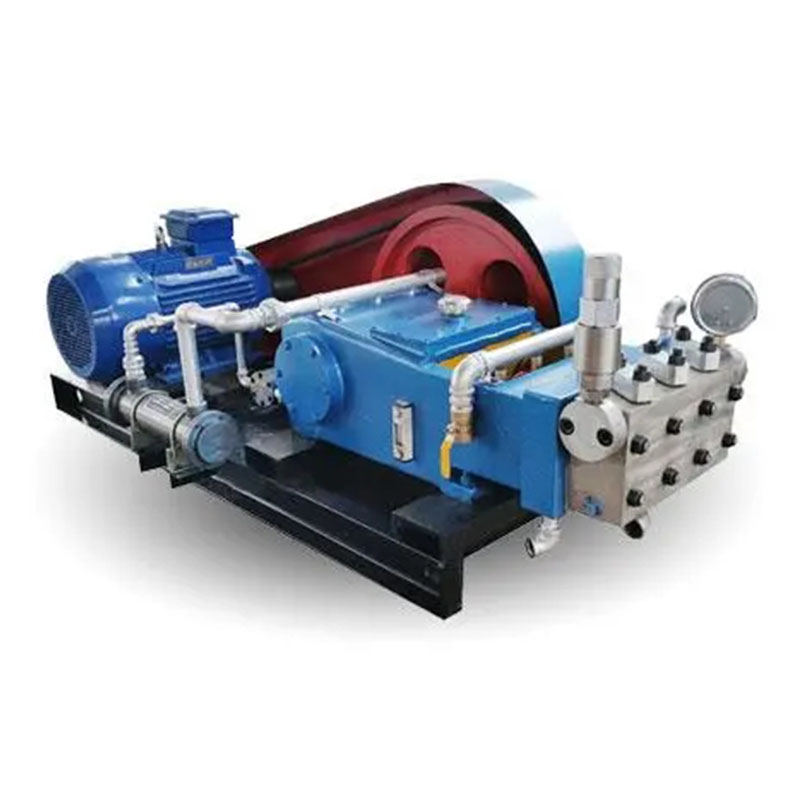
A CO2 injection pump must handle dense-phase or supercritical carbon dioxide at high pressure without leakage to atmosphere—different from water or brine injection on both hydraulics and safety. CO2 injection pump selection starts with phase state at suction, target injection pressure and rate, containment class, and whether duty is continuous EOR flood or intermittent CCS wells. This guide covers phase behavior, seal plans, metallurgy, and what to specify for oilfield EOR and carbon capture injection programs.
What CO2 Injection Pumps Do in the Field
CO2 injection raises reservoir pressure and improves oil mobility in enhanced oil recovery (EOR) floods, or stores captured CO2 in dedicated geological formations for carbon capture and storage (CCS). Pumps (or booster compressors plus injection pumps, depending on field layout) deliver CO2 from pipeline, bullet tanks, or capture trains to wellhead injection pressure.
Carbon dioxide becomes supercritical above roughly 31 bar and 31 °C—many injection programs operate in dense-phase conditions where small temperature or pressure changes shift density sharply. That affects power demand, NPSH, and seal design more than incompressible water service.
JET CO2 pump packages address high-pressure injection skids where reciprocating technology is specified for precise rate control into multiple wells or pattern segments.
Phase State, Pressure, and Rate
Define suction conditions: pipeline pressure, temperature, purity, and water content after dehydration. Wet CO2 accelerates corrosion and creates unpredictable phase shifts at the pump suction.
Discharge pressure follows reservoir fracture gradient, injection horizon depth, and allowable surface treating pressure. Rate may be fixed by regulatory permit for CCS or optimized for EOR pattern balance.
Horsepower tracks flow × pressure rise ÷ efficiency, but compressibility corrections matter—use vendor sizing with your actual thermodynamic data, not water-based curves.
- Document suction P/T and CO2 purity (H2O, H2S, O2 limits)
- State peak vs average injection rate and well count
- Clarify startup, idle, and emergency vent paths before pump selection
Seals, Containment, and Leak Management
CO2 leakage is a safety and environmental issue—not only lost product. Double mechanical seals, seal gas panels, and vent collection to flare or recovery are common on high-pressure CO2 duty.
Plunger pumps need barrier fluid compatible with CO2 permeation and depressurization events. Plan seal support systems for cold startup and rapid trip scenarios.
Regulatory and operator standards may require leak detection, blowdown routing, and documented maintenance on seal systems—factor spare seal cartridges and trained field response before deployment.
Metallurgy and Corrosion in CO2 Service
Dry supercritical CO2 is less corrosive than wet acid-gas mixtures, but free water forms corrosive carbonic acid. Materials must match dehydration level and any co-injected impurities.
Common choices include hardened stainless families and nickel alloys on critical wetted parts; avoid assumptions from brine injection specs without CO2-specific review.
If H2S or oxygen contaminants are possible, escalate to full compatibility review with metallurgy and elastomer vendors—do not reuse waterflood fluid-end kits without qualification.
Compressors, Pipelines, and Wellhead Integration
Many sites use compression to pipeline pressure and reciprocating boost for wellhead fine control. Clarify hydraulic boundary: who provides suction pressure stability during multiple-well switching.
Manifold switching, check valves, and water hammer from rapid closure can damage pump valves—coordinate with surface facility design and SCADA shutdown logic.
For CCS, document metering, custody transfer, and redundancy required by permit—N+1 pump count may be contractual, not only operational preference.
Specifying a JET CO2 Injection Pump Package
Bring suction/discharge P-T, rate envelope, CO2 purity, seal containment class, and well count to your RFQ. Link requirements to the CO2 pump product line and note EOR vs CCS duty hours.
Request a quote through the contact page with destination and startup timeline. Engineering can propose frame, wet-end materials, and seal support before you commit to skid layout.
FAQ
What is the difference between CO2 injection and water injection pumps?+
Water injection handles incompressible brine or fresh water at typical oilfield pressures. CO2 injection must manage compressible dense-phase fluid, stricter leak containment, and corrosion risks from moisture—requiring different seal plans, metallurgy, and safety systems.
At what pressure does CO2 become supercritical?+
Carbon dioxide reaches supercritical conditions above approximately 31 bar and 31 °C. Many injection programs operate near or above this region, where density and power calculations differ from liquid water pump sizing.
What seal design is used on CO2 injection pumps?+
High-pressure CO2 duty typically uses double mechanical seals with barrier fluid, vent collection, and monitoring. Exact plan depends on pressure, phase, and operator standards—specify containment requirements in the RFQ.
Does JET supply CO2 injection pumps for EOR?+
JET builds CO2 injection pump packages for EOR and high-pressure carbon injection skids. Provide phase data, rates, pressures, and purity limits when requesting a proposal.