
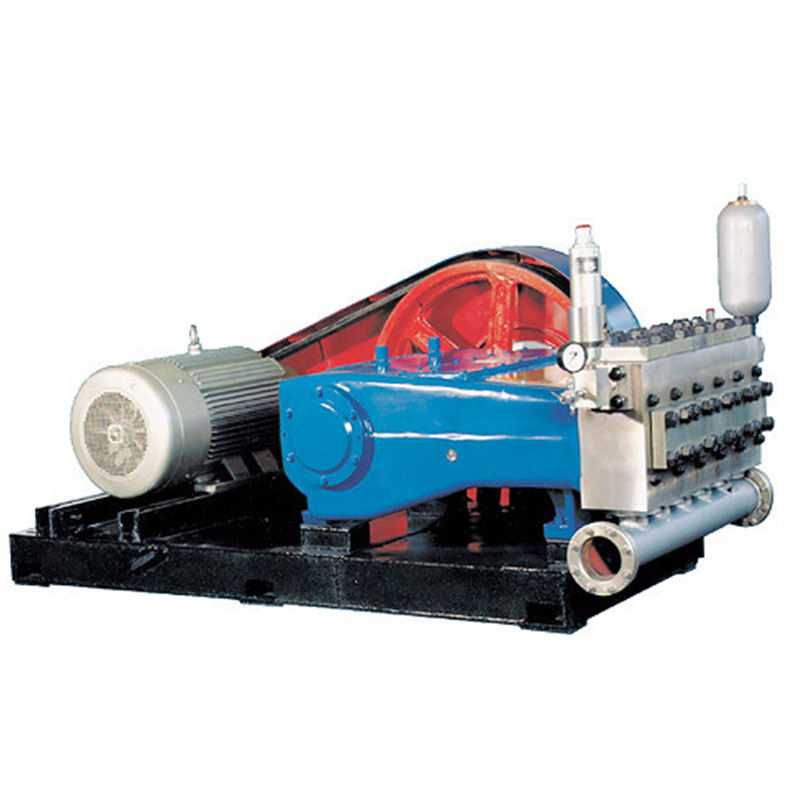
A high-pressure plunger pump is a positive-displacement machine that converts crank-driven reciprocating motion into stable liquid pressure—typically from roughly 100 bar to more than 2,500 bar depending on frame and fluid end. Plunger pump applications span industrial cleaning, oil and gas pressure pumping, chemical transfer, reverse osmosis boost, and municipal hydro-jetting because the design tolerates continuous duty and precise flow control better than many dynamic pumps at the same pressure. This guide groups common industries, typical pressure bands, and how application duty differs from pump selection specs.
How Does a High-Pressure Plunger Pump Work?
Plungers reciprocate inside sealed cylinders, drawing fluid on the suction stroke and discharging on the power stroke. Check valves or valve plates control direction; multiple cylinders—often three (triplex) or five (quintuplex)—fire out of phase to smooth pulsation.
Unlike centrifugal pumps, output flow stays nearly proportional to crank speed at a given pressure until valve or liner wear increases internal leakage. That makes plunger units suitable when operators need predictable rate for injection, cleaning nozzles, or RO feed control.
Power end (crank, crosshead, lubrication) and fluid end (liners, valves, plunger seals) are specified separately in heavy-duty applications because wear patterns differ by industry.
Industrial Cleaning and Surface Preparation
High-pressure water jet cleaning removes scale, paint, grease, marine growth, and concrete residue without abrasive blasting in many jobs. Plunger pumps supply 100–2,500+ bar class pressure to guns and rotating nozzles on shipyards, refineries, heat exchanger bundles, and municipal hydro-demolition.
Cleaning applications balance pressure and flow: cutting jobs need higher pressure; large-area rinsing needs higher gallons per minute. Heated water and detergent injection downstream of the pump are common—seal and packing limits must match temperature.
For washer package sizing and PSI–GPM matching, see the high-pressure cleaning pump selection guide.
Oilfield, Gas, and Energy Pressure Pumping
Reciprocating plunger technology underpins mud circulation, water injection, hydraulic fracturing, CO2 injection, and pipeline pressure testing in upstream and midstream service. Each line stresses valves and liners differently—solids-laden mud, proppant slurry, or clean brine.
Quintuplex configurations appear where high rate with lower pulsation is worth the added mechanical complexity—common on stimulation spreads. Triplex frames remain the default for drilling circulation and many injection skids.
Oilfield application overview links drilling, injection, fracturing, and CO2 roles; dedicated selection guides cover each product family.
Chemical and Petrochemical Transfer
Chemical high-pressure plunger pumps move corrosive, abrasive, or hazardous fluids when dynamic seals or lower-pressure centrifugal options are insufficient. Fluid end metallurgy—duplex stainless, alloy, ceramic-coated components—and seal plans must match media, temperature, and regulatory containment.
Typical duties include reactor feed, descaling acids, polymer injection, and solvent transfer at controlled rate. RFQs should include concentration, chlorides, solids, and allowable leakage class—not only pressure.
Chemical high-pressure pump selection covers material compatibility and seal containment for corrosive service.
Reverse Osmosis, Desalination, and Municipal Jetting
RO and seawater desalination plants use high-pressure feed pumps—often centrifugal multistage, sometimes reciprocating boosters in specific trains—to push water through membranes. Brackish and seawater service demands chloride-aware metallurgy and stable pressure to protect elements.
Municipal applications include sewer cleaning, hydro-excavation support, airport runway rubber removal, and wall paint or rust stripping. Duty may be intermittent but still requires reliable relief and unloader behavior on trigger guns.
Desalination pump selection addresses SWRO versus BWRO pressure bands and corrosion specs.
Food, Pharmaceutical, and Homogenization Duty
Sanitary high-pressure plunger or piston units appear in homogenization and some RO feed trains in food and pharmaceutical plants. Surface finish, elastomer compliance, and clean-in-place compatibility drive specification beyond pressure rating alone.
These programs often reference 3-A or site-specific hygienic standards. OEM documentation for wetted materials and drainability should be verified for your audit—not assumed from an industrial oilfield build.
Matching JET Plunger Packages to Your Application
Start with industry and fluid: cleaning, oilfield, chemical, or desalination. Then define pressure, flow, duty hours, temperature, and solids content.
Review the high-pressure plunger pump series for industrial frames, or the chemical and desalination lines for specialized metallurgy.
Request a quote through the contact page with application description and destination so engineering can propose fluid end and driver options.
FAQ
What industries use high-pressure plunger pumps most?+
Industrial cleaning, oil and gas pressure pumping, chemical transfer, reverse osmosis and desalination boost, and municipal hydro-jetting are the most common application groups. Each stresses fluid end materials and duty cycle differently.
What pressure range can plunger pumps reach?+
Industrial plunger frames commonly operate from roughly 100 bar to more than 2,500 bar depending on bore, stroke, and fluid end design. The correct rating is the one that matches nozzle, injection, or membrane feed requirements—not the maximum brochure number alone.
Are plunger pumps the same as piston pumps?+
Both are positive-displacement reciprocating designs. Plunger pumps typically use stationary seals with a reciprocating plunger passing through; piston pumps may use a piston with cup or ring seals. Selection language in oilfield and cleaning markets often uses both terms for triplex high-pressure units.
Does JET build plunger pumps for multiple applications?+
Yes. JET supplies high-pressure plunger and reciprocating packages for industrial, oilfield, chemical, and desalination programs. Share your fluid properties and duty cycle when requesting a proposal.