
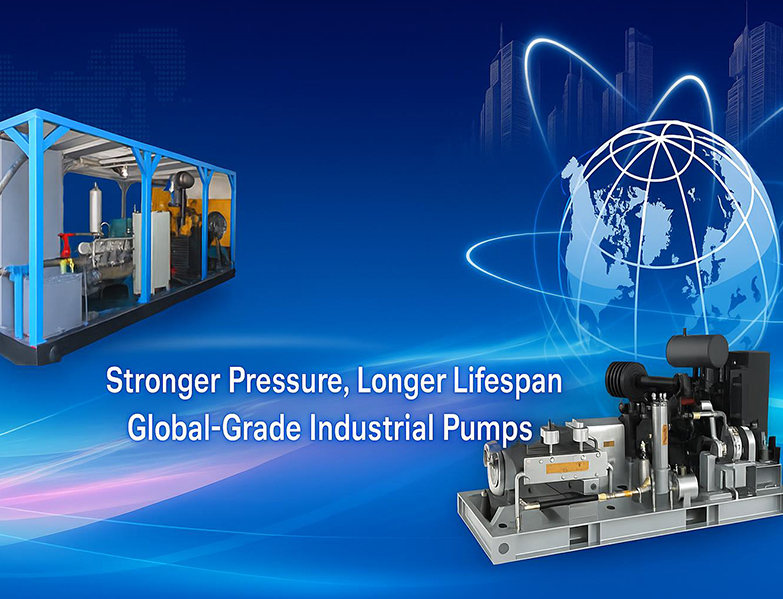
Choose a high-pressure pump by defining your duty cycle, fluid, required pressure, and flow first—then match pump type to that envelope. Plunger (reciprocating) pumps suit high pressure with controlled flow; centrifugal trains fit high flow at moderate pressure. This high-pressure pump selection guide walks through fluid end materials, driver and skid choices, and what to send JET for an RFQ.
What Should You Define Before Buying a High-Pressure Pump?
High-pressure pump selection starts with four inputs: duty, fluid, pressure, and flow. Duty covers how many hours per day the unit runs, whether load is steady or intermittent, and whether the pump must restart under pressure. Fluid defines viscosity, temperature, abrasiveness, solids content, and chemical compatibility—each drives wet-end materials and valve design.
Pressure must include line friction, elevation head, and control valve drop, not only the static design point at the nozzle or wellhead. Flow is the volume you need at that pressure, including turndown if multiple zones or batch steps share one skid. Skipping any of these four items leads to oversizing horsepower, wrong pump technology, or packages that fail within the first maintenance cycle.
Document suction conditions as well: available NPSH, supply tank level swing, and whether fluid arrives aerated or with entrained gas. Many field failures trace to suction cavitation rather than discharge pressure rating.
- Duty: continuous vs intermittent hours, restart conditions, ambient and altitude
- Fluid: chemistry, temperature, solids, abrasiveness, shear sensitivity
- Pressure: operating setpoint plus friction, elevation, and valve losses
- Flow: required rate at pressure, turndown range, parallel gun or well demand
Plunger vs Centrifugal vs Other Pump Types
Plunger and piston pumps are positive-displacement machines: each crank revolution delivers a predictable volume at high discharge pressure. They dominate oilfield mud circulation, water injection, grouting, hydrostatic testing, and chemical transfer above roughly 150–200 bar where centrifugal efficiency drops. Triplex layouts—three plungers at 120° phase—are the industrial default for smoother flow and compact skids.
Centrifugal and multi-stage centrifugal pumps move high flow at moderate pressure along a performance curve. They suit booster stations, descaling supply headers, and desalination pre-boost when pressure stays within a few stages and flow varies widely. Running a centrifugal pump far left on its curve causes heat and instability; forcing it past its stage limit requires a reciprocating alternative.
Other types appear in niche roles: diaphragm and hose pumps for shear-sensitive or leak-sensitive chemicals at lower rates; gear pumps for lubrication and small-metering loops. For most B2B high-pressure RFQs in upstream and industrial service, the decision narrows to reciprocating plunger packages versus multi-stage centrifugal trains—then to the correct product line within JET's plunger family.
- Plunger / piston: high pressure, controlled flow, solids-tolerant options
- Centrifugal / multi-stage: high flow, moderate pressure, curve-sensitive operation
- Diaphragm / hose: low pulsation, strict containment, lower rate chemical duty
How Do Fluid End and Materials Affect Selection?
The fluid end—liners, valves, seats, packing, and manifolds—determines what you can pump safely and how often you service the unit. Clean water or light oil allows standard iron or steel wet ends with conventional valve geometry. Abrasive slurries, drilling mud, or cement grout need hardened liners, heavy-duty valve patterns, and fast access to wear parts.
Corrosive chemicals, H2S, high salinity, or CO2-laden brine require explicit metallurgy: stainless trim, nickel alloys, or non-metallic seats where appropriate. A frame rated for 10,000 psi with the wrong seat material fails quietly long before the pressure limit is reached. Match materials to the worst-case fluid composition, not the average sample.
OEM and fleet operators should ask about interchange programs, spare kit standardization, and valve cover access before committing to a frame size. Maintenance intervals driven by fluid end wear often matter more than marginal horsepower on remote pads or plant floors.
How to Match Pressure and Flow Requirements
Required discharge pressure and flow are linked through pump displacement, crank speed, and system resistance. For plunger pumps, bore and stroke set theoretical output per revolution; actual delivery falls as valves wear and internal leakage grows. Size with margin for liner wear and filter differential pressure over the service interval—not only day-one conditions.
For centrifugal selections, plot the system curve against the pump curve and confirm the operating point stays in the stable region across turndown. Variable speed helps both technologies, but minimum speed limits still apply for lubrication and cooling on reciprocating frames.
Relief valve setpoint, pulsation dampener sizing, and minimum flow recycle belong in the same calculation. Dead-head or shut-in events—even brief ones during valve switching—can damage plungers and seals if bypass paths are undersized. Provide the manufacturer a single operating envelope, not isolated maximum pressure and maximum flow from different design cases.
Skid, Drive, and Installation Considerations
Prime mover choice—diesel engine, electric motor, or hydraulic drive—depends on site power, hazardous area classification, altitude, and continuous duty derating. Electric drives need VFD harmonics and crank speed limits checked against pump rating. Diesel packages require fuel quality, cooling airflow, and exhaust routing compatible with the pad or plant layout.
Skid design affects lifecycle cost as much as pump catalog data. Plan lifting points, alignment and grouting requirements, instrument taps for pressure and vibration monitoring, and laydown space for plunger or valve service. Offshore and modular plant projects add weight and footprint limits; remote land pads may need split fluid ends field crews can handle without a crane.
Installation mistakes—skewed skids, starved suction, undersized pulsation control—show up months later as seal leaks and bearing wear. Include integrator scope in the RFQ: who supplies PLC logic, shutdown interlocks, and commissioning support.
- Driver: diesel vs electric vs hydraulic, derating, area classification
- Skid: footprint, weight, lifting, maintenance access, vibration isolation
- Controls: SCADA signals, relief and unloader strategy, commissioning scope
How to Specify a JET High-Pressure Pump Package
JET builds high-pressure reciprocating pumps and integrated packages for mud circulation, water injection, chemical transfer, and general industrial OEM skids. Cross-reference your application with the high-pressure plunger pump series, mud pump series, injection pump line, or chemical high-pressure pump series when fluid chemistry or duty differs from clean water transfer.
Bring target pressure and flow, fluid type and temperature, solids content if any, duty hours per day, prime mover preference, suction conditions, and any existing pump tags or interchange requirements to your RFQ. Skid layout drawings and destination market certifications help engineering propose the correct frame before civil works or rig-up are locked.
Request a quote through the contact page with destination port and startup timeline. JET engineering can confirm fluid end options, lubrication scheme, and driver sizing before you commit to procurement.
FAQ
When should I choose a plunger pump instead of a centrifugal pump?+
Choose a plunger (reciprocating) pump when you need high discharge pressure with controlled, predictable flow—typical for injection wells, mud circulation, grouting, hydrostatic testing, and many chemical transfer duties. Centrifugal pumps fit high flow at moderate pressure where operating points stay on a stable curve. When wellhead or process pressure exceeds practical centrifugal stage limits, reciprocating technology is the usual answer.
What information should I send for a high-pressure pump quote?+
Send operating pressure and flow (including turndown), fluid type and temperature, solids or abrasives content, duty hours per day, suction supply conditions, prime mover preference, skid constraints, and any existing pump model numbers for interchange. Water analysis or chemical compatibility notes are essential for injection and chemical service.
Can one high-pressure pump cover multiple applications?+
Sometimes, if pressure–flow envelope, fluid compatibility, and turndown overlap. Mud circulation, injection, and chemical duty often need different fluid end trim even on similar frames. State all planned operating modes in the RFQ rather than sizing for only the highest pressure case.
Does JET supply high-pressure pump packages for OEM and field replacement?+
Yes. JET configures high-pressure plunger pumps for OEM skids and field replacements across mud, injection, chemical, and general industrial programs. Share application details and interchange requirements when requesting a proposal.