
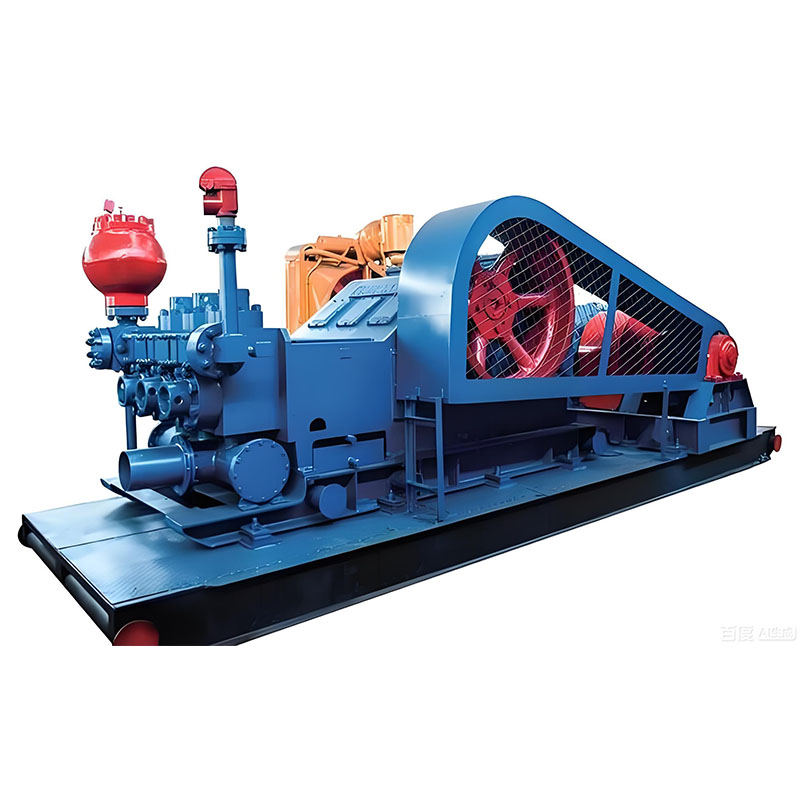
A mud pump liner is the replaceable cylinder in the fluid end. Its bore sets how much mud each stroke moves and the pressure that stroke can hold. A smaller liner raises discharge pressure and lowers flow at the same stroke and speed. Buyers should name the liner sizes already in the fleet before asking for a new pump.
What a Mud Pump Liner Does
The liner is the wear surface the piston runs in. Stroke length and strokes per minute stay with the power end. Bore diameter is what the crew changes when the well needs more pressure or more volume.
Liners, pistons, and rods are consumables. A pump that matches the liner diameters you already stock avoids a second spare-parts list on the rig.
Why a Smaller Liner Raises Pressure and Cuts Flow
Each stroke displaces a volume set by bore and stroke. A smaller bore moves less mud per stroke, so flow drops if strokes per minute stay the same. The same input power then acts on a smaller area, so the fluid end can be rated for higher discharge pressure.
The rating is a pair, not a single number. Ask for pressure at the liner size you will actually run, at the mud weight on the well. A brochure pressure taken on the smallest liner overstates what a larger liner can hold.
- Liner bore you will install, not only the smallest optional bore
- Stroke length and maximum strokes per minute
- Required flow at the bit and standpipe pressure
- Mud weight and solids that drive liner wear
What to Put on a Liner RFQ
List every liner diameter the rig already uses, the piston and rod pattern, and whether the fluid end must interchange with the frames in the fleet. Pressure and flow without a liner size cannot be checked.
State suction conditions. A liner sized for discharge pressure still loses effective flow if the suction tank, charge, or mud temperature lets the pump cavitate.
How JET Treats Liner Size on an OEM Mud Pump
JET mud pumps for oil and gas drilling are quoted against the liner range, standpipe pressure, and flow the rig needs—not a single nameplate. Share the fluid-end family you already run so liners and pistons can follow the existing spare plan.
If the duty is a packaged skid, include footprint and the prime mover. Liner access covers have to stay clear after the pump is mounted.
FAQ
Does a smaller mud pump liner always mean higher pressure?+
It raises the pressure the fluid end can be rated for, and it lowers flow at the same stroke and speed. Confirm the rating at the liner size you will run, not at the smallest bore in the catalog.
Can I change liner size without changing the power end?+
Often yes, within the bores that fluid end was built for. Piston, rod, and clamp must match the new liner. Do not assume every bore fits every frame.
Why does mud weight belong on the liner spec?+
Heavier mud and more solids raise the load on the liner and the pressure the standpipe actually sees. A clear-water rating does not describe drilling duty.
What should I send JET for a liner-matched quote?+
Send liner diameters in use, required flow, standpipe pressure, strokes per minute, mud weight, and whether the fluid end must interchange with your current frames.