
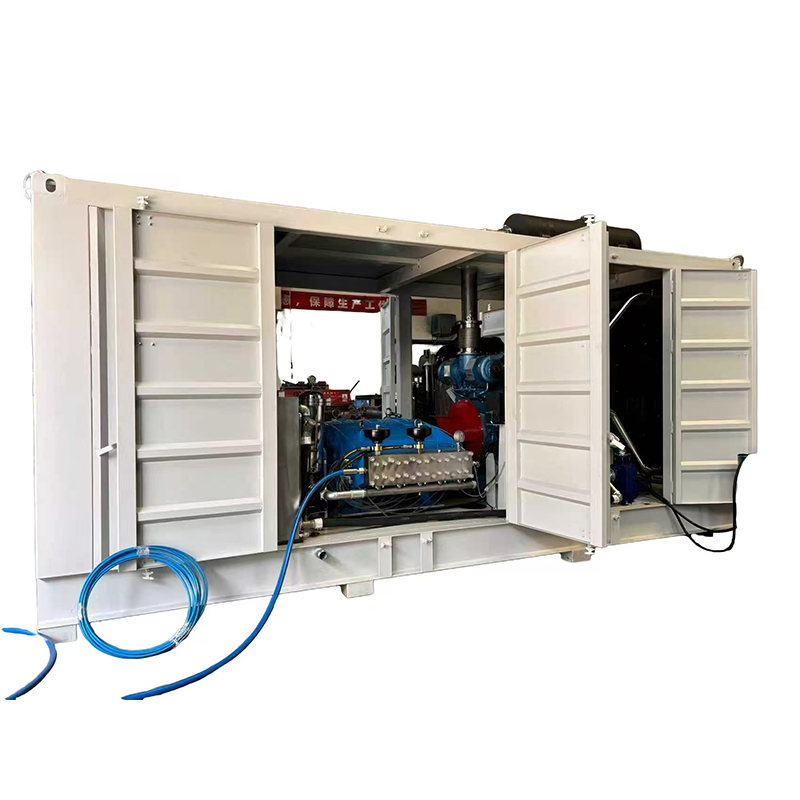
A high pressure cleaning pump for heat exchanger descaling removes scale and foulants with water jetting so tubes return to design heat transfer—without abrasive blasting in many plants. Selection starts with deposit type, tube ID access, required jet pressure, and continuous duty for multi-bundle campaigns. This guide covers pressure–flow matching, lance and tip choices, safety, and how industrial cleaning pumps differ from oilfield mud or chemical transfer units.
Why Heat Exchangers Need High Pressure Cleaning Pumps
Fouled heat exchangers lose efficiency and raise fuel or power cost. High pressure water jetting cleans tube ID and OD (where accessible) by cutting deposits with controlled jet energy. A correctly sized high pressure cleaning pump keeps jet pressure stable so operators finish bundles without hunting pressure on the gun.
JET high-pressure cleaning machine series combines industrial plunger pump technology with controls suited to refinery, chemical, and power-plant turnaround work.
Matching Pressure and Flow to Deposit and Tube Size
Hard scale and narrow tubes often need higher pressure; soft foulants and larger IDs may clean faster with more flow at moderate pressure. Start from plant cleaning procedures and past successful jobs—not a maximum brochure psi alone.
Continuous duty rating matters when crews clean many bundles per shift. Size the high pressure cleaning pump for sustained output with cooling and maintenance access planned for long turnarounds.
- Deposit hardness and tube ID access
- Required jet pressure and lance length
- Hours per day and ambient temperature for continuous duty
Safety, Containment, and Site Rules
High pressure water jetting can injure skin and damage soft metals if misused. Follow site PPE, exclusion zones, and dump-valve training. Confirm whether hot work or confined-space rules apply to the exchanger bay.
Containment for wash water and removed scale should meet environmental permits—skid drip pans and hose routing are part of the cleaning package, not an afterthought.
Cleaning Pumps vs Mud or Chemical Transfer Pumps
Mud pumps move abrasive slurry in drilling loops; chemical high-pressure pumps contain process acids for transfer or dosing. A high pressure cleaning pump is optimized for jetting water (sometimes with mild additives) through lances and tips at stable gun pressure.
Do not repurpose a mud or frac unit for exchanger cleaning without validating nozzle duty, pulsation, and operator safety interlocks.
Specifying a JET High Pressure Cleaning Package
Share deposit type, tube sizes, target pressure, preferred lance/tip standards, and whether the unit is trailer, skid, or plant-fixed. Link to the high-pressure cleaning machine product page.
Request a quote through the contact page with turnaround dates and destination so engineering can propose pump frame size and controls.
FAQ
What pressure is needed to clean heat exchanger tubes?+
Required jet pressure depends on deposit type and tube access—soft foulants may clean at moderate pressure with higher flow, while hard scale often needs higher pressure. Follow site procedures and past successful jobs rather than a single catalog maximum.
Can one high pressure cleaning pump serve multiple exchangers?+
Yes, if continuous duty rating, hose reach, and tip inventory cover the campaign. Confirm cooling and maintenance access for long multi-bundle turnarounds.
Is a high pressure cleaning pump the same as a chemical pump?+
No. Cleaning pumps jet wash water for descaling; chemical high-pressure pumps transfer or meter process chemicals with fluid-specific metallurgy and seals.
Does JET supply high pressure cleaning pumps for heat exchangers?+
JET builds industrial high-pressure cleaning machine packages for plant washdown and descaling. Share pressure, duty hours, and site constraints when requesting a proposal.