
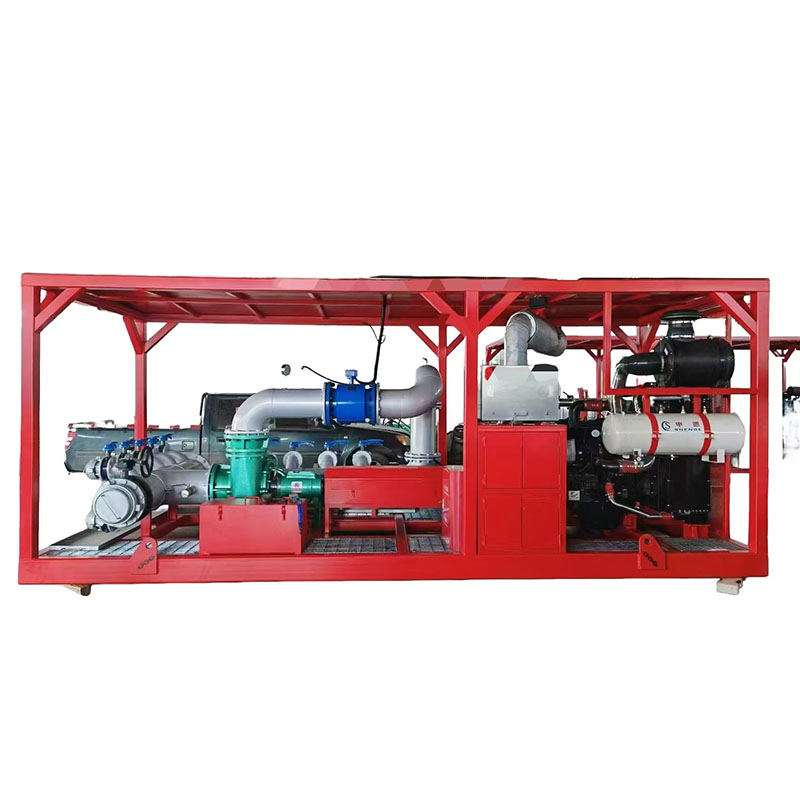
The fracturing pump fluid end is the wet section that sees proppant-laden slurry at high rate and pressure—where liners, valves, and seats wear fastest on a stimulation skid. Specifying the fluid end correctly matters more for pad uptime than chasing a small gain in brochure horsepower. This guide covers abrasive wear, valve geometry, change-out access, and what to put on a fracturing pump RFQ.
What Is a Fracturing Pump Fluid End?
The fluid end is everything wetted by frac fluid: suction and discharge valves, seats, liners or plungers, and the manifold. Unlike a mud pump circulating for days, a fracturing pump fluid end sees intense stages with sand loading that concentrates wear in hours.
JET fracturing pump packages use configurable fluid ends aimed at abrasive slurry programs for pressure pumping fleets.
How Proppant Loading Drives Wear
Higher sand concentration and resin-coated proppant accelerate liner and seat wear. Rate and treating pressure set stroke count per stage; fleets that track sand tonnage per fluid end predict change-outs better than calendar days alone.
Acid stages in the same job add corrosion on top of abrasion—confirm metallurgy for the full stimulation recipe, not sand-only water tests.
- Sand loading and mesh size from the completion design
- Max treating pressure and stage duration
- Whether acid or solvent stages share the same fluid end
Valves, Seats, and Quick-Access Covers
Valve geometry and seat materials must survive impact and erosion. Quick-access covers reduce non-productive time when a fluid end fails mid-pad—layout space for pull tools before the skid arrives.
Standardizing wet-end kits across fleet units simplifies warehouse stock on remote pads.
Fracturing Fluid End vs Mud Pump Fluid End
Mud pump fluid ends optimize for continuous solids-laden circulation. Fracturing fluid ends optimize for intermittent high-rate abrasive slurry. Mixing kits between services without review shortens life on both.
Keep spare strategies and change-out procedures separate by service line even if power ends look similar.
Specifying a JET Fracturing Pump Fluid End
Bring stage rate, treating pressure, max sand loading, and preferred interchange standard to your RFQ. Link to the fracturing pump product page and note trailer or skid constraints.
Request a quote through the contact page with destination and fleet start date. Engineering can propose liner materials, valve packages, and access layout before deployment.
FAQ
What is a fracturing pump fluid end?+
It is the wet section of a fracturing pump—valves, seats, liners or plungers, and manifold—that contacts proppant slurry at high pressure during stimulation stages. It is the primary wear item on a frac pump package.
How often should a frac pump fluid end be rebuilt?+
Intervals depend on sand tonnage, pressure, and fluid chemistry—not a fixed calendar alone. Rising washout, loss of rate at pressure, or visible scoring are practical triggers. Fleets track stages or sand per fluid end for planning.
Can mud pump fluid ends be used on fracturing pumps?+
Generally no for proppant fracturing without re-specification. Wear geometry and duty cycle differ; using the wrong kit accelerates failure and raises non-productive time.
Does JET supply fracturing pump fluid ends?+
JET configures fracturing pump packages with fluid ends for abrasive slurry duty. Share sand loading, pressure, and interchange needs when requesting a proposal.