
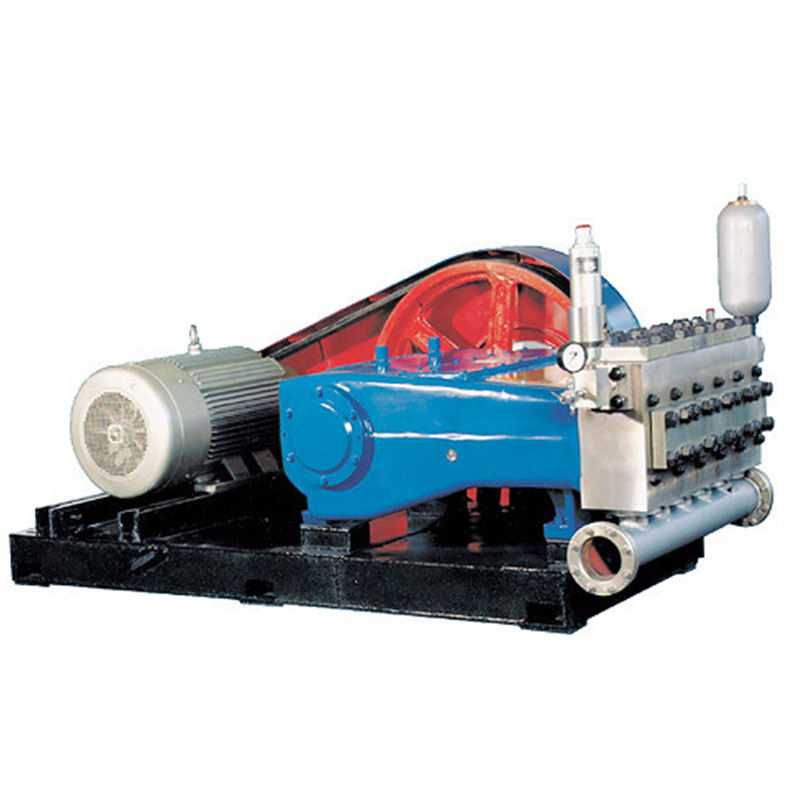
A high-pressure plunger pump converts rotary input into reciprocating displacement at controlled pressure and rate—the core technology behind mud, injection, grouting, and chemical packages built on the same power-end principles. Plunger pump selection starts with your fluid properties, required pressure and flow, and whether duty is continuous circulation or intermittent batch service. This guide covers triplex versus duplex layouts, fluid end sizing, prime mover matching, and what to specify before procurement.
What Does a High-Pressure Plunger Pump Do?
Plunger pumps use reciprocating plungers or pistons in a fluid end to displace liquid through check valves on each stroke. They deliver high pressure with predictable volumetric output tied to bore, stroke length, and crank speed—unlike centrifugal pumps that trade pressure for flow along a curve.
Industrial applications span oilfield support, descaling, hydrostatic testing, reactor feed, mining slurry transfer, and cleaning systems where pressure must stay high even at low flow. The same basic triplex frame appears across product lines; what changes is fluid end metallurgy, valve type, and packaging for the specific service.
JET high-pressure plunger pump series provides configurable frames for OEM skids and field replacements. When comparing vendors, start with the duty cycle and fluid—not the brochure HP class alone.
Triplex vs Duplex Plunger Pumps
Triplex pumps—three plungers firing 120° apart—dominate modern high-pressure industrial packages. Flow is smoother than duplex (two-cylinder) designs, pulsation is lower, and power density fits compact skids. Duplex units remain on lighter or legacy sites where simplicity outweighs pulsation control.
Quintuplex and quintuple layouts add cylinders for higher flow at similar crank speed, common in stimulation and large-volume transfer. They cost more and demand tighter alignment. For most plunger pump RFQs in general industrial service, triplex is the baseline comparison point.
- Duplex: simpler, higher pulsation, lighter legacy duty
- Triplex: industry default for high-pressure industrial packages
- Quintuplex: high flow, lower pulsation, specialty large-volume duty
Fluid End, Valves, and Wear Parts
The fluid end determines what fluid you can pump and how often you change liners and valves. Bore diameter and stroke set theoretical displacement per revolution; valve and seat design set how well solids, viscosity, or heat are tolerated.
Abrasive or solids-laden fluids need hardened liners and correct valve geometry. Clean water or oil service allows standard wet-end options with longer maintenance intervals. Easy access to valve covers and liner pull paths reduces non-productive time more than marginal horsepower gains.
OEM-compatible fluid ends let fleets standardize spare kits across units. Ask which interchange programs apply and how spare parts ship to remote sites before you standardize on a frame size.
Matching Pressure, Flow, and Driver
Required discharge pressure must include line friction, elevation, and any control valve drop—not just the static design point. Flow at that pressure follows from plunger size and strokes per minute. Oversizing pressure rating without flow need adds cost; undersizing forces operators to run near relief and shortens valve life.
Prime mover selection—diesel, electric motor, or hydraulic—must reflect continuous duty with altitude and ambient derating. Electric drives need VFD harmonics and crank speed limits checked against pump rating. Leave margin for liner wear: internal leakage rises as clearances open, dropping effective flow before the gauge shows a problem.
Relief valve setpoint, pulsation dampener sizing, and suction conditions belong in the same sizing conversation. Cavitation at suction destroys valves faster than overpressure at discharge on many installations.
Applying Plunger Pumps Across Service Lines
The plunger pump is a platform: mud circulation, water injection, cement grouting, and chemical transfer differ in fluid chemistry, solids loading, and operating rhythm. Selecting the correct product line means matching wet-end materials and duty assumptions—not only mounting the same frame on a different skid paint scheme.
Cross-reference your application with the dedicated selection guides for mud pumps, injection pumps, grouting pumps, and chemical pumps when fluid or duty falls outside clean water transfer. Using a water-rated plunger package on abrasive or corrosive service without upgrade is a common field failure mode.
Specifying a JET High-Pressure Plunger Pump
Bring target pressure and flow, fluid type, solids content if any, duty hours per day, prime mover preference, and interchange requirements to your RFQ. Link to the high-pressure plunger pump product line and share skid layout drawings when space is constrained.
Request a quote through the contact page with destination port and startup date. Engineering can confirm frame size, lubrication scheme, and fluid end options before you commit to rig-up or plant tie-in.
FAQ
What is the difference between a plunger pump and a piston pump?+
Both are reciprocating positive-displacement pumps. Plungers seal statically with packing around a reciprocating rod; pistons typically move with the sealing element attached to the piston itself. In high-pressure industrial language, plunger pump often describes triplex high-pressure frames regardless of internal detail—confirm valve and liner specs for your fluid.
Why are triplex plunger pumps common in high-pressure service?+
Three cylinders firing out of phase deliver smoother flow and compact power density compared with duplex designs. That reduces pulsation in surface piping and is the default layout for modern industrial high-pressure packages.
How do I size horsepower for a plunger pump?+
Horsepower follows pressure, flow, and mechanical efficiency at planned crank speed—not a fixed catalog class. Provide operating pressure, required flow, fluid properties, and duty cycle so the manufacturer can size the driver with realistic derating.
Does JET supply high-pressure plunger pumps for OEM and replacement?+
JET builds configurable high-pressure reciprocating pumps for OEM skids and field service, with fluid end options for abrasive, clean, and chemical-duty programs. Share existing pump tags and interchange needs when requesting a match.