
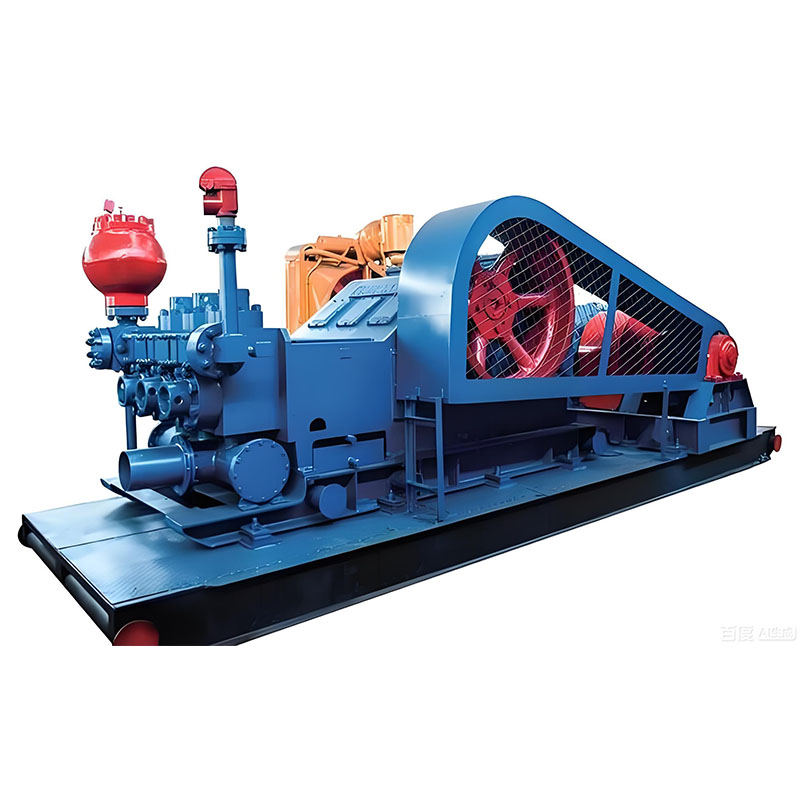
A mud pump oil and gas package must keep circulation stable when cuttings load spikes and standpipe pressure swings—continuous solids-laden flow, not catalog horsepower alone. Selection starts with your drilling fluid plan: triplex layout, fluid end and power end, mud pump skid packaging, and the pressure–flow window your hole size and depth require. This guide helps procurement and drilling engineers match oilfield and gas rigs.
What Does a Mud Pump Do in Oil and Gas Drilling?
A mud pump is the prime mover for drilling fluid in rotary oil and gas drilling. It takes suction from the active pits, boosts pressure through standpipe and hose, and sends fluid through the drill string to the bit. That loop cools the bit, transports cuttings to surface, stabilizes wellbore pressure, and—in many wells—drives downhole motors or MWD tools.
When circulation stops, cuttings settle, temperature rises at the bit, and pressure control becomes harder. That is why rig contracts treat mud pump uptime as seriously as top drive availability. For land rigs in abrasive formations, the pump sees sand-laden mud for weeks; offshore, space and weight limits push operators toward compact triplex mud pump skid packages with high power density.
JET mud pump series targets oilfield and gas wells where solids-laden slurry must move at stable pressure. Compare models against the circulation plan your mud engineer already wrote: flow rate at bit, expected solids loading, and maximum operating pressure—not the brochure nameplate alone.
Triplex vs Duplex Mud Pumps
Most new-build oil and gas rigs specify triplex mud pumps: three plungers or pistons, crank-driven, firing 120° out of phase. The layout delivers smoother flow than a duplex (two cylinders) and fits modern 1,000–2,200 HP packages. Duplex units still appear on workover rigs and legacy sites, but triplex dominates greenfield projects because pulsation is lower and maintenance intervals are easier to plan.
Quintuplex pumps—five cylinders—show up in high-horsepower and fracturing-adjacent duty where operators want more flow with less pulsation dampening hardware. They cost more upfront and need tighter alignment discipline. For standard drilling circulation, triplex remains the default when RFQs mention F-series or 3NB-class frames.
- Duplex: simpler, higher pulsation, common on older or lighter rigs
- Triplex: industry default for land and offshore mud pump oil and gas duty
- Quintuplex: high flow / high HP; more common in specialty pressure pumping
What Is a Mud Pump Skid and Why Does Packaging Matter?
A mud pump skid is the structural package that mounts the pump, drip containment, lift points, guards, and drive alignment for land pads or offshore decks. Specifying the mud pump skid early prevents late redesign when deck space, crane capacity, or dual-pump redundancy constraints appear.
Field crews care about valve cover access, liner changes without pulling the entire package, and whether diesel or electric drive fits the skid envelope. Offshore and compact land layouts often size the skid before they finalize peak horsepower.
When buyers search mud pump skid or mud pumper packages, they usually need a complete circulation unit—not a bare frame. Ask vendors to quote skid options, spare fluid end kits, and destination shipping together so landed cost and rig-up time are clear.
- Single vs dual mud pump skid for redundancy on critical wells
- Lift points, drip pans, and guard interlocks in the delivery scope
- Confirm liner change access before freezing deck layout drawings
Key Components: Fluid End and Power End
The fluid end is everything wetted by mud: valves, seats, liners, pistons or plungers, and the discharge manifold. Abrasive mud attacks liners and valves first. Specifying hardened liners, correct valve geometry, and easy-access covers reduces non-productive time more than chasing an extra 50 HP on the power end.
The power end converts motor or diesel input into reciprocating motion: crankshaft, crosshead, frame, and lubrication circuit. Frame stiffness matters when you run near peak pressure for hours. Misalignment between power end and fluid end shows up as premature bearing wear—not as a gradual efficiency loss you can ignore until turnaround.
OEM-compatible fluid ends let fleets standardize spare valves and liners across rigs. When you evaluate a mud pump manufacturer, ask which interchange programs they support and how they ship fluid end kits to remote pads. JET configures pressure and flow targets with field-replaceable wet-end options suited to abrasive mud pump oil and gas programs.
Pressure, Flow, and Rig Matching
Pressure and flow are coupled through nozzle sizing, inside diameter of drill pipe, and back-pressure from the annulus. Your hydraulics program should give a minimum flow at bit to lift cuttings and a maximum standpipe pressure the string can tolerate. The pump must sit inside that window with margin for surge and gel break.
Operators sometimes oversize flow and undersize pressure rating—or the reverse—because they copied a sister rig without re-running hydraulics. Shallow vertical wells and extended-reach horizontals do not share the same pump envelope.
Match the prime mover to continuous duty, not peak brochure numbers. Diesel packages need altitude and ambient temperature derating; electric rigs need motor slip and VFD harmonics checked against pump crank speed. Leave headroom for liner wear: as liners thin, internal leakage rises and effective flow at bit drops even though the gauge looks unchanged.
Specifying a JET Mud Pump Oil and Gas Package
Bring five inputs to your supplier conversation: target flow and pressure, mud weight and solids content, prime mover type, mud pump skid constraints, and the interchange standard you want for wear parts. JET builds high-pressure reciprocating mud pumps for OEM skids and field replacements.
Link selection work to the mud pump for oil and gas product page and share deck drawings early if space is tight. Request a quote through the contact page with duty hours per day and destination port so engineering can propose frame size, lubrication, and skid layout before rig-up.
FAQ
What is mud pump oil and gas duty?+
Mud pump oil and gas duty means circulating drilling fluid on oil and gas wells—cooling the bit, lifting cuttings, and stabilizing wellbore pressure with solids-laden mud at high flow and pressure. It differs from injection or fracturing service because the fluid carries abrasives through the active pit loop for days or weeks.
What is a mud pump skid?+
A mud pump skid is the packaged base for the pump, containment, lift points, and drive alignment used on land pads and offshore decks. Specifying skid size early matches deck space, lift limits, and single versus dual pump redundancy.
Is mud pumper the same as mud pump?+
Mud pumper is informal field language for the mud pump package or the crew running circulation. On purchase documents, specify mud pump frame, fluid end, and mud pump skid so vendors quote equipment correctly.
Why do most oil and gas rigs use triplex mud pumps?+
Triplex layouts provide smoother flow and compact power density for modern drilling packages. Three cylinders firing out of phase reduce pulsation compared with duplex designs, which simplifies surface piping and is the default for new land and offshore circulation systems.
Can JET mud pumps match OEM F-series or 3NB interchange?+
JET offers configurable fluid ends and OEM-compatible options for major drilling platforms. Share your existing pump tag, stroke length, liner size, and skid constraints when requesting a match so engineering can confirm interchange for valves, liners, and frame interfaces.