
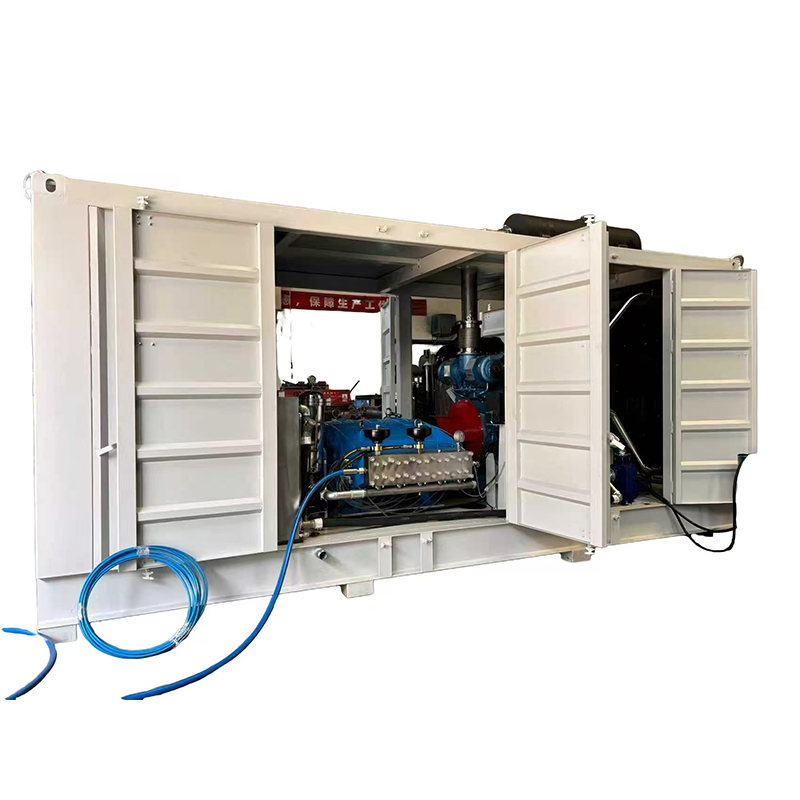
A high-pressure cleaning pump converts mechanical power into focused water pressure—the core of industrial washdown, descaling, hydro-demolition, and ship or tank cleaning systems. Unlike low-pressure transfer pumps, cleaning pumps are rated for intermittent or continuous trigger duty with unloader valves, hoses, and nozzles that define what operators feel at the gun. This guide explains how plunger cleaning pumps work, how pressure and flow interact at the nozzle, and where industrial cleaning packages differ from consumer pressure washers.
What Does a High-Pressure Cleaning Pump Do?
High-pressure cleaning pumps take suction from a tank or municipal supply and discharge water—or detergent mix—at elevated pressure through hoses and trigger guns. The jet impact removes deposits that low-pressure rinsing cannot: rust scale, paint, grease, marine growth, and concrete residue on industrial equipment, vessels, pipelines, and floors.
The pump is only part of the system: motor or engine, unloader or regulator, relief path, filtration, and nozzle orifice together determine safe, effective cleaning. Specifying the pump without the rest of the circuit leads to hunting pressure, overheated bypass, or starved nozzles when crews add a second gun.
JET high-pressure cleaning machine series packages industrial plunger pumps for plant maintenance, oilfield washdown, mining equipment cleaning, and contractor fleets that need shift-long duty—not brochure peak PSI from a restricted test orifice.
How Plunger Pumps Generate Cleaning Pressure
Most industrial cleaning pumps use reciprocating plunger or piston technology: a crank drives plungers in cylinders, drawing water on suction and forcing it out on discharge through check valves. Triplex (three-cylinder) layouts fire out of phase to reduce pulsation felt at the gun.
Mechanical energy from an electric motor or diesel engine becomes fluid pressure in the wet end. Efficiency depends on valve condition, packing leakage, and crank speed—worn liners show up as slow pressure recovery when the operator pulls the trigger after bypass.
Compact axial or wobble-plate pumps on consumer washers can reach high peak PSI for short bursts but are not interchangeable with triplex industrial skids rated for continuous bypass and field rebuild.
Pressure, Flow, and Cleaning Effectiveness
Pressure (bar or PSI) drives jet cutting force; flow rate (GPM or L/min) drives rinsing speed and the volume of water available at the nozzle. Effective cleaning depends on both—not maximum PSI alone.
Low to medium pressure—roughly 11–30 MPa in many industrial tables—suits equipment washdown, ship hulls, and brick without damaging substrate. Higher bands support paint removal, tube bundle descaling, and hydro-demolition where procedure allows.
Nozzle orifice size links pressure and flow: opening the orifice increases flow demand at a given pressure. Size the pump for the guns and hoses your crew actually runs, including friction loss on long hose lays.
- Higher PSI: cutting, coating removal, tight deposits
- Higher GPM: large surfaces, tank rinsing, multi-operator manifolds
- Balance both for impact force at the nozzle—not catalog peak PSI only
Industrial Cleaning Pumps vs Consumer Pressure Washers
Consumer units prioritize portability and cost with shorter duty cycles and lighter wet ends. Industrial cleaning pumps use heavier frames, oil-bath or grease lubrication, serviceable valves and packing, and unloaders designed for hours of bypass between trigger pulls.
Environmental and safety expectations differ on plant sites: guard interlocks, relief discharge routing, whip checks on couplings, and training for injection injury risks are part of industrial system design.
When RFQs compare cat pump class or triplex industrial frames, confirm stroke, bore, crank speed, and whether heated water or detergent injection is in scope—not only maximum PSI on the nameplate.
Where High-Pressure Cleaning Pumps Are Used
Refineries and chemical plants clean heat exchangers, reactors, and floors. Mining and construction wash down haul trucks and structural steel. Oilfield service cleans rigs, tanks, and pressure-control equipment. Marine yards remove fouling from hulls and decks.
Municipal teams use jetting for sewer cleaning, graffiti removal, and airport runway maintenance. Hydro-demolition contractors cut concrete with ultra-high-pressure systems when engineering permits water cutting instead of mechanical breakers.
Each site differs in water supply quality, duty hours, and whether heated water accelerates grease removal—those inputs belong in the pump specification before purchase.
Next Steps: Sizing and Specifying a Cleaning Package
After you understand pump role and PSI–GPM basics, move to selection: target pressure and flow, number of operators, heated water need, and mount type (fixed skid, trailer, or portable bay).
High-pressure cleaning pump selection guide covers pump types, unloader behavior, heating, and what to specify before you buy.
Browse the high-pressure cleaning machine series and request a quote through the contact page with duty hours and destination port.
FAQ
What is a high-pressure cleaning pump?+
A pump that boosts water to elevated pressure for industrial jet cleaning—supplying hoses, guns, and nozzles that remove scale, paint, grease, and deposits. Industrial units typically use reciprocating plunger technology rated for longer duty than consumer pressure washers.
How do pressure and flow affect cleaning?+
Pressure drives jet cutting force; flow drives rinsing speed and volume at the nozzle. Tough deposits often need higher pressure; large areas need higher flow. Effective cleaning balances both at the orifice your crew uses.
Are industrial cleaning pumps the same as home pressure washers?+
No. Industrial plunger pumps use heavier frames, serviceable wet ends, and unloaders built for continuous or shift-long duty. Consumer washers prioritize portability and short intermittent use with lighter components.
Does JET supply high-pressure cleaning pump packages?+
Yes. JET builds industrial cleaning pump systems for washdown, descaling, and field service. Share PSI–GPM targets, duty cycle, and heating needs when requesting a proposal.