
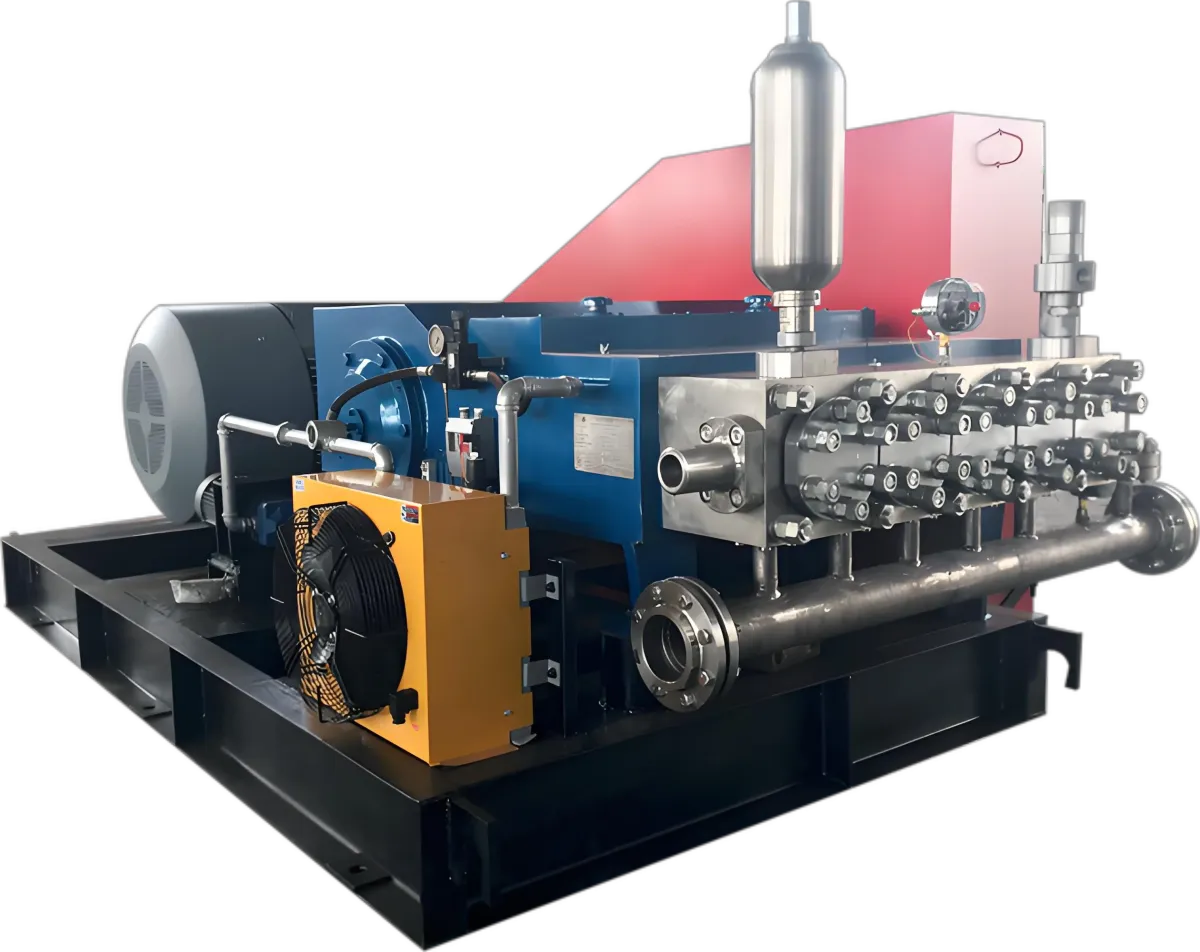
Oilfield high-pressure pumps fall into distinct mechanical classes—reciprocating plunger, multistage centrifugal, and specialized triplex or quintuplex units for mud, fracturing, and cementing—not interchangeable labels for the same machine. Plunger pumps deliver precise rate at high pressure on slurry or filtered fluids; centrifugal trains excel at continuous high flow on clean water. This guide is a type taxonomy: how each pump class is built, what fluids it handles, and how procurement teams match pump technology to service line before opening an application map or selection guide.
How Are Oilfield High-Pressure Pump Types Grouped?
Upstream procurement separates high-pressure pumps by reciprocating versus rotodynamic principle, cylinder count, and fluid-end design—not by marketing names alone. Reciprocating plunger pumps use pistons or plungers in a crank-driven fluid end to displace fixed volumes per stroke. Multistage centrifugal pumps add head through stacked impellers on a continuous shaft. Within reciprocating service, mud pumps, fracturing pumps, cementing pumps, and injection pumps share a common crank-and-plunger architecture but differ in valve metallurgy, stroke length, and solids tolerance.
Type selection precedes brand or frame size. A quintuplex fracturing unit and a triplex mud pump may look similar on a datasheet but are not substitutes: proppant loading, pulsation, and maintenance intervals diverge immediately in field service. This page classifies pump types so engineers can name the correct technology in an RFQ before comparing horsepower or pressure ratings across unrelated applications.
For where each type is deployed on location—circulation, injection, stimulation—see the oilfield high-pressure pump applications guide. Here the focus stays on mechanical taxonomy and wet-end differences.
What Are Reciprocating Plunger High-Pressure Pumps?
Reciprocating plunger pumps—triplex (three-cylinder) and quintuplex (five-cylinder) are the dominant oilfield layouts—convert crank rotation into linear plunger motion through a crosshead and connecting rod. Each suction and discharge stroke moves a defined volume, which gives predictable rate control and high volumetric efficiency at pressures where centrifugal curves flatten.
Fluid ends on plunger pumps include liner, plunger, suction and discharge valves, and packing or seal assemblies rated for the service fluid. High-pressure plunger pump series used in oilfields may share frame geometry across injection, cementing, and general industrial duty while swapping valve and liner materials for brine, H2S, or abrasive slurry. Cylinder count affects pulsation frequency: quintuplex designs deliver smoother flow at similar crank speed, which matters on fracturing and precision injection skids.
Plunger pumps remain the default type when discharge pressure exceeds typical centrifugal stages, when solids or proppant travel through the wet end, or when rate must track a PLC setpoint across changing back-pressure.
- Triplex: three plungers, common on mud, cementing, and many injection skids
- Quintuplex: five plungers, common on land fracturing fleets for higher rate and lower pulsation
- Fixed displacement per stroke enables metering and rapid pressure response
Where Do Multistage Centrifugal Oilfield Pumps Fit?
Multistage centrifugal pumps accelerate fluid through a series of impellers on one shaft, building discharge pressure without reciprocating motion. In oilfields they appear on large water injection stations, pipeline booster lines, and transfer headers where flow is high, fluid is filtered, and continuous duty hours dominate over peak treating pressure.
Centrifugal types handle lower pulsation naturally and suit variable-speed operation across a flow range when pressure stays within the pump curve. They are poor substitutes for mud circulation or proppant fracturing: solids and slurry destroy impeller clearances and seals. When wellhead injection pressure climbs beyond the centrifugal envelope, a plunger booster skid often takes over downstream of a centrifugal transfer train.
Hybrid layouts—centrifugal transfer to plunger injection at the pad—are a common type pairing, not a single pump doing both roles.
What Defines a Fracturing Pump Unit Type?
Fracturing pump units are reciprocating plunger machines engineered for proppant-laden slurry, short intense stages, and parallel fleet operation. Type markers include hardened fluid-end components, rapid-access valve covers, high crank speed capability, and frame sizing for N+1 redundancy on completion pads.
Land fleets standardize on triplex or quintuplex fracturing pumps driven by diesel or electric prime movers. Quintuplex types reduce pulsation amplitude at high stage rate, which lowers fatigue on treating iron and simplifies downstream measurement. Fracturing pump type is not defined by pressure rating alone—solids loading and stage duty cycle separate frac-spec wet ends from general high-pressure plunger builds.
Fracturing pump selection and fracturing pump purpose guides cover stage parameters and fleet layout after you confirm this pump class fits the program.
How Are Mud Pump Types Different from Other Plunger Pumps?
Mud pumps are reciprocating triplex (or occasionally duplex) units built for drilling fluid circulation: solids-laden slurry, long daily run hours, and standpipe pressures set by drilling hydraulics. The mud pump type emphasizes passing cuttings and weight material through oversized fluid passages, replaceable liners, and valve systems sized for abrasive wear—not the low-pulsation metering priority of injection skids.
Power end, fluid end, and pulsation dampener layout on rig mud pumps follow drilling OEM conventions so crews can service units with familiar tools and spares. Swapping a mud pump type specification onto a water injection header without redesign oversizes solids tolerance and underspecifies rate stability.
Mud pump selection covers liner size, stroke, and valve spec for circulation duty on land and offshore rigs.
How Do You Choose Among Oilfield High-Pressure Pump Types?
Start with fluid properties: solids content, viscosity, temperature, and chemical compatibility. Then define duty cycle—continuous injection hours versus intermittent fracturing stages versus 24-hour circulation. Match those inputs to pump type before comparing frame manufacturers.
Use plunger types when pressure, solids, slurry, or precise rate control dominate. Use centrifugal types when clean fluid, high continuous flow, and moderate pressure define the envelope. Document minimum turndown, allowable pulsation, and maintenance access before copying a sister-field spec that may be a different pump class entirely.
Cross-check type choice against related selection guides: injection pump selection for wellhead metering, fracturing pump selection for stimulation fleets, and mud pump selection for rig circulation.
- Name the service line and fluid before horsepower or pressure rating
- Plunger for high pressure, solids, slurry, and setpoint control
- Centrifugal for filtered water at high continuous flow
- Do not interchange mud, frac, and injection type specs without engineering review
Specifying JET Oilfield High-Pressure Pump Types
Tell JET which pump type your skid requires—mud circulation, injection, fracturing, cementing, or general high-pressure plunger—and provide target pressure, rate, fluid description, and prime mover preference.
Browse the injection pump, fracturing pump, and mud pump series product pages for type-matched reciprocating packages, or the high-pressure plunger pump series for shared-frame industrial and well service builds.
Request a quote through the contact page with destination port and startup timeline so engineering can confirm pump class, fluid end, and frame size before procurement locks a mismatched type.
FAQ
What is the main difference between plunger and centrifugal oilfield pumps?+
Plunger pumps displace fixed volume per stroke and handle high pressure, solids, and slurry with precise rate control. Centrifugal pumps build head through rotating impellers and suit high continuous flow on clean, filtered fluids at moderate pressure. They are different mechanical types, not small versus large versions of the same design.
Are fracturing pumps a separate pump type from injection plunger pumps?+
Both are reciprocating plunger machines, but fracturing pump types use fluid ends and metallurgy for proppant slurry and short peak stages. Injection plunger types prioritize steady metering on cleaner fluids over longer hours. Specifying one type for the other role causes rapid valve wear or wasted capital.
Why do most drilling rigs use triplex mud pumps instead of centrifugal units?+
Drilling mud contains solids and cuttings that damage centrifugal impellers and seals. Triplex mud pump types are built with fluid passages and valve systems for abrasive circulation at standpipe pressures drilling hydraulics require.
Does JET manufacture multiple oilfield high-pressure pump types?+
Yes. JET builds reciprocating packages for mud, injection, fracturing, and high-pressure plunger service. Share your service line, fluid properties, and pressure–rate targets so engineering can propose the correct pump type and fluid end.